How does faith relate to worship? By Bob Deffinbaugh
(1) The Israelites failed to see the relationship between the affirmation of their faith in their worship (Ex 15:1-21) and the application of their faith in their daily walk (Ex 15:22-26). Israel had just proclaimed her faith in God as her warrior (Ex15:3), but she was unable to trust in God as her "Waterer" (Ex 15:22, 23, 24, 25, 26). That God could handle a problem with the water at Marah should not come as any surprise. After all, God had delivered Israel and destroyed the Egyptians by means of His control of the water in the Red Sea. The winds (which the song describes as coming from the breath of God, v8,10) caused the waters to part. God was able to make the waters congeal, so that there were walls of water on both sides of the Israelites (cf. Ex 15:8). God caused the waters to close in upon the Egyptian army, drowning them all. If God could deal with the waters of the Red Sea, surely He could be trusted to deal with the waters of Marah. Israel should have been able to apply the faith she affirmed in the “Song of the Sea” to her dilemma at the waters of Marah, but she did not.
Lest we become unnecessarily perturbed at the Israelites for their lack of faith, and become a little proud of ourselves, let me suggest that the problem which Israel illustrates is also one of the greatest problems of Christians in every age, including our own. We often fail to apply our faith in God, resulting from one event, to another event which is virtually identical. For example, the feeding of the 5,000 (Mk 6:30-44) should have taught the disciples to trust in the Lord Jesus to feed the multitudes, and yet shortly after this great miracle, the disciples failed to apply their faith to the matter of feeding the 4,000 (Mk 8:1-10).
When we gather to worship God, we do not sing the “Song of the Sea” but we do sing many hymns and choruses which express our faith in God. We sing, “Great Is Thy Faithfulness,” and then go our ways fretting and worrying about the petty details of our lives, as though God was not faithful at all. We sing, “It Is Well With My Soul,” but when some little irritation comes along, our faith flounders. We sing, “O, for a Thousand Tongues,” and then, when someone makes fun of our faith, we are tongue-tied and cannot find any words to say concerning our faith.
The point is simply this. It is a great deal easier to affirm our faith in public worship than it is to apply our faith in our daily walk.* Here is the real crunch. Here is where the rubber meets the road. It is not that we need to worship less, it is that we must apply in our daily walk those truths which we affirm in our worship. Just as God led the Israelites to the waters of Marah, so He leads us in such a way as to give us ample opportunity to apply our faith, or at least to reveal our lack of faith.
One of the contributing factors to our failure to apply our faith in our daily walk is that we tend to create false distinctions between those areas which are sacred (church, public worship) and those which are secular (work, daily living). The result is that we think of our faith as relevant to our “devotional” activities, but not to our daily activities. It is my contention that God distinguishes between those matters which are holy and those which are profane, but not between those matters which are sacred and those which are secular. A more careful look at the Law of Moses will reveal that Israel’s faith was to govern and guide them in the minute details of their (secular) lives.
(2) Not only did Israel fail to apply their faith to their situation at Marah, they failed to even see the problem as being spiritual. In the text we read that the Israelites protested against Moses, not against God (v24). They demanded that Moses produce water for them, they did not cry to God for water. It is my contention that they did not see their circumstances as demanding a “spiritual” solution, but only as demanding a “secular” solution. At least when the Israelites were trapped between the Egyptian army and the Red Sea they cried out to God for help (before they began to grumble against Moses, cf. Ex 14:10, 11, 12). Here, at Marah, they immediately confronted Moses, and ignored God altogether.
Ironically, the Israelites forgot that the pillar of cloud was still guiding them (cf. Ex 13:21, 22), and that God Himself was present with them in the cloud. If they were wrongly led, God led them wrongly by the cloud.* Imagine the protests of the Israelites, while the cloud hovered over the waters of Marah. The Israelites failed to understand that if God promised to bring them safely out of Egypt and into the land of Canaan, any obstacle which would hinder or prevent them was one with which God was concerned, and which He could overcome. They failed to see bitter water as a matter about which God would be concerned, but He was concerned because water was necessary to preserve His people.
At the Red Sea, Israel should have learned that God was able to overcome any obstacle* (such as the Red Sea, which He parted) or any opponent* (such as the Egyptians, which He drowned in the Red Sea—the obstacle). Thus, while the Israelites sang that God was going to overcome their opponents (the Canaanites), they did not grasp the fact that He would also overcome all the obstacles to their entrance into Canaan (such as the bitter waters of Marah).
How often we fall into the very same trap.* We view God as being concerned only with the big problems of life, those which appear to be spiritual. But anything which hinders our growth, our sanctification, or our ability to do what He has purposed is a matter about which He is concerned, and which He is able to overcome. Frequently, when we encounter a problem in our lives, we do not even consider that it is something about which God is intimately concerned. We immediately begin to turn to secular solutions, without seeking God’s solution.
Wednesday, June 13, 2012

Monday, June 4, 2012
Jehovah-Jireh : The Lord Will Provide
What does 1 John 4:19 teach us? We love because He first loved us.
(He is the initiator. We are the responders.)
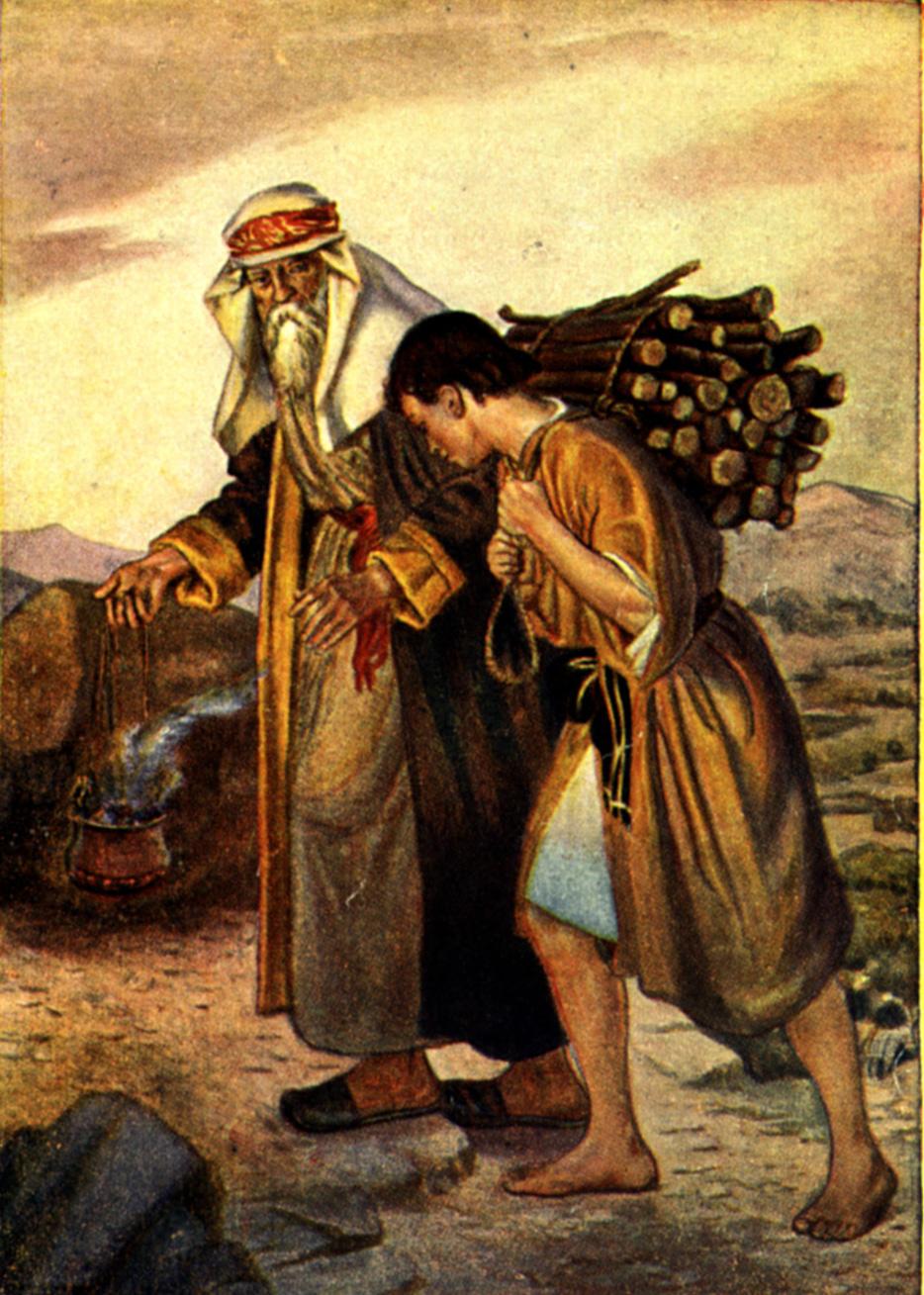
Abraham (the father) loved his son first and Isaac responded with love that naturally lead to him TRUSTING and OBEYING his father
We see this as Issac "bowed", "bended his knee" in submission and LAID down and let his father bind him when he noticed there was no lamb for the sacrifice
because he didn't question his father's love for him.

Although God has the right to lead and IS the leader..
if WE don't give Him the right to lead, He cannot lead us!
Image: Someone we trust and love (husband, parent, friend) grabs our arm and tries to lead us somewhere..
We would follow.
But if it's a stranger, we would not follow!
Thought this was the perfect picture for an example..Nooree does not look like he knows where he is even going in this picture..and we are in some creepy looking woods..but because I know and trust him..I still follow....(although it looks as though I prob shouldn't in this case..but unlike our husbands, God always knows where He is taking us ..hhaha)
Do we know and trust Him??

Why do the sheep lay down?
Psalm 23:
The sheep that knows the Shepherd will lie down when He tells them to, even though everything around them looks like they shouldn't rest or lie down, because they trust the Shepherd.
They don't have peace in the circumstances, but in the one who leads them.
And as the sheep learn to follow the Shepherd, they learn to TRUST and OBEY more and more.
Definition of Forebearance: Patience, endurance, abstinence, self-control, abstaining from the enforcement of a right.
It was in the SMALL areas of life that Abraham practiced and learned to bow his knee to God..
so, when it came to the BIG thing..He was able to do it.
Because he knew that it was GOOD for him!
*Our role as parents are to teach our children to be humble before the Lord and bow their knees to God as we also bow our knees to God.
Gensis 22:1 says God tested Abraham. Why does God test us?
- 1 Peter 1:6-7 - That the genuineness of our faith would be shown and bring praise, glory and honor at the revelation of Jesus Christ.
- Exodus 20:20 - So that we would learn the fear of the Lord, given the gift of the fear of the Lord and so that we won't sin.
- Deuteronomy 8:2 - To humble us (bow our knee to Him) and for us to see what's really in our hearts.
- Deuteronomy 8:16 - To humble us and to do good for us in the end.
- James 1:2-3 - To produce steadfastness.
"Faith is shown to be real when it's tested." - Wonmin Kim (hehe)
Hebrew word for "worship" is shachah or proskuneo in Greek which means to bow self-down, crouch, fall down flat, and humbly beseech.
Abraham said he and Issac were going to go worship and come back down..
He was saying that they were going to "bow down" and submit to God's perfect will.
It's hard to put our hope in God in things that we don't understand and follow Him in areas..
but Proverbs 3:5-6 tells us to not to lean on our own understanding and trust in the Lord!
We need to learn how to submit and bow down to our earthly authority figures (husbands, parents, etc..) even when they are wrong (except when they are sinning)..and it will make you stronger and we receive blessings from that as well.
Some good questions from our sisters:
- What are the "Issacs" in your life that you can't lay down before God?
- Can we prioritize God over the many little "issacs" in our lives?
Thursday, May 24, 2012
Chapter 8 Jehovah-jireh, The Lord Will Provide - on Love, Worship, Obey

Genesis 22:1-19
this is a story that i'm well familiar with. but it wasn't until last week when i took the time to study this passage myself and then with the women that i saw the richness of it. we focused on 3 words: love, obeyed, worship,.
kay arthur said in the book "In Genesis 22 you see the first mention of these three words in the Bible. God has written twenty-one chapters, and until now these words have not been used. When a significant word is mentioned for the first time in the Word of God, the principles connected with that word at that point hold true throughout the Scripture. This is called the principle of first mention"
love- used to describe the relationship between the father and his son- very sacred, passionate, like no other..
worship- Abraham's obedience to God's word- even to the point of sacrificing his one and only son, whom he loved. worship is not just singing praises on sunday morning. we are to worship God all the time. we do this by obeying his Word.
obeyed- because of Abraham's obedience it effected all generations right down to us! when we choose to obey God's words there is so much blessing that comes from it. Abraham's obedience showed that he feared God and he did not withhold anything from him.
Abraham was a man of such great faith! God promised him that his offsprings will be as numerous as the stars. yet when God told Abraham to go sacrifice his one and only son, he obeyed with no hesitation. no questions asked! he completely trusted God that he would provide. it's as if he knew that even if he killed his son, God had to power to raise him from the dead! he knew as God was Jehovah, a covenant keeping God.
you can also see Issac's obedience in this. i'm sure Issac knew what was going on. he could've easily prevented his old frail dad from tying him to the wood to be sacrificed, but he didn't. his faith in God was just as evident. this had to be taught by his dad.
one cool thing i found out was that in this passage, God stops Abraham from killing his son and then provides a ram to be sacrificed.
i looked up what the significance of a ram was because i was curious as to why of all animals God would choose a ram.
a ram represents protection. it is a male sheep that protects the herd.
this lead me to think of Jesus! as a protector, he was sacrificed for his sheep and we reap the blessings from it.
the order that these 3 words came up in this passage is love, worship, and then obeyed. the reason for this may be to show us how God desires our relationship with him. He wants our love first. we must love him above all else. without love, everything we do is meaningless. the love and adoration we have for Him will lead to worship. when we worship God we obey his Word.
This passage then ties in to John 3:16. See for yourself where love, worship, and obedience ties into it. It makes you look at the passage differently!
“For God so loved the world, that he gave his only Son, that whoever believes in him should not perish but have eternal life."
Tuesday, May 15, 2012
THE SELF-EXISTENT ONE CHAPTER 7

JEHOVAH
is the self-existent One- “ I AM WHO I AM.” EXODUS 3:13-15
Jehovah speaks to God’s being or essence. Nathan Stone says “Thus when we
read the name Jehovah, or LORD in capital letters, in our Bible, we think in
terms of being or existence and life, and we must think of Jehovah as the Being
who is absolutely self existent, the ONE who in Himself possesses essential
life, permanent existence.”
God is the SUPREME being. He exists not by any other thing. He relies on NOTHING to exist. “I AM WHO I AM” Can you just imagine how significant that fact alone
is? It is powerful.
A sister, Jessica Hong, shared with me that when God reached
out to Moses via the Burning Bush.
That burning bush alone is so amazing. In order to build a fire, we need heat and something
combustible to make fire. But God
made fire without anything, the wood in the bush did not burn!
There was just fire.
So we must rest here… God is “ I AM WHO I AM!” God being self-existent shows God’s
superiority of all things and His power!
AMEN?
John Piper shared this in a sermon that I thought was very
thought provoking:
Suppose
the president of the United States invited you and a few of your friends to the
White House for a reception. As you enter the cozy green room, the president is
sitting by the fire place and you walk right by him without a glance or a
greeting. For the whole evening you neither look at him nor speak to him nor
thank him nor inquire why he called you together. But every time the one
reporter asks you if you believe in the existence of the president, you say,
"Of course." You even agree that this is his house and that all this
food came from his kitchen. But you pay him no regard. Practically speaking you
act as if you do not believe he exists. You ignore him. He has no place in the
affections of your heart. His gifts, not himself, are the center of your
attention.
The
vast majority of people who say they believe in God treat him this way. He is
like hydrogen. You learned once in school that it is in the air you breathe,
but after that your belief in it has made no difference in your life. Every
time someone takes a poll, you say, "Of course, hydrogen exists."
Then you return to things that matter.
Put
yourself forward a few years to the day when every human being will give an
account of himself before the living God. God will say to millions of people,
"Now it is my understanding that you said often during your life that you
believed in me. You affirmed my existence. Is that right?"
"Yes." "And is it not true that in your life the more honor and
importance and virtue and power and beauty a person had, the more regard he was
paid and the more respect he was shown and the more admiration he received? Is
that not the case?" "Yes." "Then why is it that I had such
an insignificant place in your life since you say you believed in me? Why
didn't you feel more admiration for me and seek my wisdom more often and spend
time in fellowship with me and strive to know the way I wanted you to make all
your everyday decisions? Why did you treat me as though I were like
hydrogen?"
What,
I ask you, what is the world going to answer? What are thousands of so-called
Christians going to answer, whose faith in God is virtually the same as their
faith in hydrogen?
·
How should the fact that God is self-existent
impact your life? Do you give him
the reverence and awe that He deserves?
The
one other important point because He is supreme, self-existent
unaffected by anything, He never changes.
What He says stands He never changes His mind! He never changes!!!
HE NEVER CHANGES! He is a
covenant keeping God. His promises
never change. He doesn’t promise
one thing and take it back later.
Pg
56: “ When you need assurance that God is there, that He will keep His promises
without changing- even though you have wavered in your promises to Him- run to
Jehovah. Trust in His name. It can’t change because He can’t
change. He is Jehovah- the same
yesterday, today, and forever.”
This
is a HUGE truth! I personally
shared that many times I put my trust in people and the world. But people and the world changes… they can love you one moment but then can hate you the
next. One thing can seem safe but
become so dangerous. Everything in
this world is like sand.. always
shifting… and there is nothing that can hold us steady like a rock but ….. GOD…
our JEHOVAH… which means self-existent one ( never changes). So why do we run from Him? Why don’t we believe it? Why don’t we trust it?
Every
attribute in the bible is TRUTH.
And it will stand because He can’t change. The bible is TRUTH.
We must hold fast.
I
had the girls share a bible verse that comforted them or had a great
significance in their life. And it
was amazing to see and hear God’s truth anchoring them. Keeping them safe and witnessing God’s
amazing love for each one of them.
He’s alive and active in our lives. I then asked,” DO YOU BELIEVE THIS TO BE TRUE?” yes “WILL GOD EVER CHANGE HIS MIND AND TAKE
THOSE WORDS BACK?” no
HOW
AMAZING IT IS THAT WE CAN PUT OUR TRUST IN GOD? AND HE REVEALS HIMSELF TO US PLAINLY IN THE BIBLE OF WHO HE
IS. AND HOW COMFORTING IT IS TO KNOW THAT WE CAN BE SECURE IN THAT BECAUSE HE
NEVER CHANGES.
EXODUS
35: 5-7
The
LORD, the LORD God, is compassionate and gracious, slow to anger, and abounding
in lovingkindness and truth; who keeps lovingkindess for thousands, who
forgives iniquity, transgression and sin; yet He will by no means leave the
guilty unpunished, visiting the iniquity of fathers on the children and on the grandchildren to the third and
fourth generations.”
WE
CAN BELIEVE IT BECAUSE GOD IS SELF-EXISTENT!!
Pastor
John PIPER said it well:
O
how easy it is going to be for God to condemn the world at the judgment!
Sometimes in our self-asserting pride we actually think that God is going to
have trouble finding enough evidence to be just in sentencing people to hell.
But if you allow yourself to think clearly for a moment about the overwhelming
implications of the statement, "God exists," you will see that it is
going to be very easy for the Judge on that day. The defendants will be utterly
speechless because of the manifest inconsistency of their lives. The portfolio
of the prosecuting attorney will not have to be opened beyond page 1 where it
says, "Defendant affirmed that God exists; personal life lived as though
God made no difference."
Contained
in the name “Jehovah” is the first and most important truth about God: he
exists. And for those who will stop pursuing their own glory and their own
private pleasure long enough to consider it, that makes all the difference in
the world.
Wednesday, April 25, 2012
Ch.6 Adonai: The Lord
Lord:lord /lɔrd/
noun
1. a person who has authority, control, or power over others; a master, chief, or ruler.
2. a person who exercises authority from property rights; an owner of land, houses, etc.
3. a person who is a leader or has great influence in a chosen profession: the great lords of banking.

From the book;
Lord: more than a word; it indicates a RELATIONSHIP. The lordship of God means His total possesion of me and my total submission to Him as Lord and Master. As Adonai, He supplies what His servants need in order to perform their Master's will. But as Adonai, God has a right to expect Obedience.
Two Greek words translated as Lord in the NT:
Kurious - supreme in authority, controller.
Despotes- an absolute ruler
Is the definition of the LORD match the life you live out?
Knowing VS Doing
"Learning is when you can see it actively applied to one's life, not when one just knows it." - Hendricks

Consider Matthew 7:
“Not everyone who says to me, ‘Lord, Lord,’ will enter the kingdom of heaven, but the one who does the will of my Father who is in heaven. On that day many will say to me, ‘Lord, Lord, did we not prophesy in your name, and cast out demons in your name, and do many mighty works in your name?’ And then will I declare to them, ‘I never knew you; depart from me, you workers of lawlessness.’
“Everyone then who hears these words of mine and does them will be like a wise man who built his house on the rock. And the rain fell, and the floods came, and the winds blew and beat on that house, but it did not fall, because it had been founded on the rock. And everyone who hears these words of mine and does not do them will be like a foolish man who built his house on the sand. And the rain fell, and the floods came, and the winds blew and beat against that house, and it fell, and great was the fall of it.”
(Matthew 7:21-27 ESV)
Our foundation? How is our foundation of faith/action?
On Submission:
With submission comes all we need for the task He puts before us. Whatever it is, As Adonai He supplies what His servants need in order to perform their Master's will. (p48)
Who in our lives should we submit to? (doesn't even have to be people, but sometimes even our circumstances) If we are rebellious with earthly leaders then we are not submissive to our heavenly master.
On Slave-Master relationship:
ex) Abraham and his servant Eliezer
The master provided for the servant totally. It was the master's duty to protect and care for his slave according to his need. The master even provided direction in his day-by-day living. Slaves of Hebrews were considered members of the household....
The song Pierce my ear:
In Bible times, a servant had to serve his master for six years, after which he was free to leave. If the servant had a good master and if he loved his master, he could decide to stay with his master forever, and the servant would then pierce his ear as an outward symbol of his inward devotion, as demonstrated in Exodus 21:2-6:
When we sing the song “Pierce My Ear” we are telling God that He is a good master and we love Him and want to serve him forever. We no longer pierce our ears as a sign of devotion, but we can absolutely have our hearts pricked, or pierced, for Christ, who died to save us,
http://www.youtube.com/watch?v=nsGMNijd1Lg&feature=results_video&playnext=1&list=PL13D7A27D5A5DE767
Because God is our master, no one can get through to us without going through God, the master Himself.
Loneliness; A surprising opportunity to know God
From Encouragement, The Key to Caring by Crabb and Allender

The route to knowing God eventually passes directly through the valley of profound loneliness. It is in the times when there is no one but God that we learn to know Him most fully. Those times-those moments of utter aloneness - come only from emptying our lives into the lives of others.
When we depend on no one to minister to us, when we thankfully accept the little encouragement coming our way from others, then the soul will feel its deepest longing- to abandon itself to someone perfectly reliable and strong. We will feel profound loneliness. If in that moment we stadfastly refuse to compromise our commitment to minister, if we dependently abandon ourselves to no one, then the loneliness will intensify.
At those moments when the loneliness is greatest, we must turn in desperate dependency to God. We must entrust ourselves so completely to Him that our psychological doom is assured if He fails to respond. Then we will come to know more of Him. Then godly character will grow. His glory bursts through most brightly when the night is darkest. His strength is proven most sufficient when we are weakest. His love penetrates most deeply when we feel unloved...
The character of an encourager must be strong. It must be molded and hardened in the fires of loneliness when no one but God is there. And loneliness- that surprising opportunity to know God- comes as we so thoroughly commit ourselves to ministering to others that we depend on God alone to misnister to us. His ministry draws us into His very presence so that we can speack to ministry draws us into His very presence so that we can speak to others from holy ground. Then our words have power for good.
Sunday, April 1, 2012
Snack/Notes Rotation Schedule (April-May)

4/5 Esther - Snack, Notes
4/12 Sue Lee - Snack, Notes
4/19 Suzane Hong - Snack
4/26 Allie Mcginley - Snack, Notes
5/3 Amy Acobacey - Snack
5/10 Jeannette - Snack, Notes
5/17 Andrea Kim - Snack, Notes
5/24 Jen Ko - Snack, Notes
5/ 31 Jane Han- Snack, Notes
Subscribe to:
Posts (Atom)